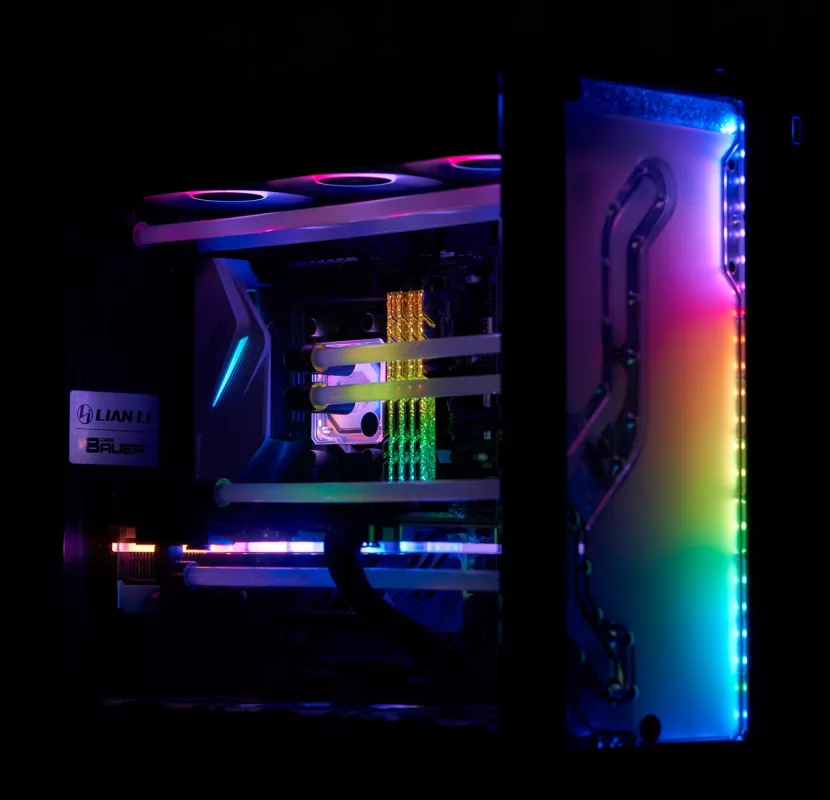
You know, for us PC enthusiasts, a computer isn't just a tool; it's an extension of our personality, a canvas for our creativity. And while off-the-shelf cases do a decent job, there's nothing quite like a custom PC case to truly make your rig stand out. I mean, who wants a generic box when you can have a masterpiece, right?
Custom PC cases are all about pushing boundaries, moving beyond the standard metal boxes to create something uniquely yours. It's not just about aesthetics, though that's a huge part of it. We're talking about optimizing airflow in ways standard cases can't, showcasing those expensive components you've lovingly picked out, or even building a machine that fits into an awkward space where no commercial case would. It's a journey, a challenge, and honestly, a labor of love.
Why Go Custom? The Allure of Unique Hardware
So, what drives someone to spend countless hours, and let's be real, often a fair bit of money, on building a custom case? I think it boils down to a few core desires:
- Personal Expression: This is huge. Your PC can genuinely reflect your style, hobbies, or favorite themes. Imagine a case shaped like a spaceship or one with intricate carvings.
- Unmatched Aesthetics: Commercial cases, even high-end ones, tend to stick to a certain design language. Custom cases break free from that, allowing for unique materials, lighting arrangements, and visual flair that just isn't possible otherwise.
- Optimized Performance: Believe it or not, a custom case can actually improve your PC's performance. By designing the internal layout yourself, you can create a superior airflow path, accommodate larger radiators, or even integrate exotic cooling solutions like external liquid cooling loops.
- Showcasing Components: If you've invested in a gorgeous GPU, RGB RAM, or a custom liquid cooling loop, you want to show it off! Many custom cases prioritize visibility, turning your hardware into a display piece.
- Specific Functionality: Maybe you need a super-compact ITX build that still fits a full-sized GPU, or a server rack case that's tailored for a very particular setup. Stock cases often can't hit these niche requirements.
It's not just about having a computer; it's about having *your* computer. One that nobody else has.
The Spectrum of Customization: From Mods to Ground-Up Builds
When we talk about custom PC cases, it's not a one-size-fits-all definition. There's a whole spectrum of how far you can take things:
Case Modding: The Entry Point
Many folks start with case modding, which involves modifying an existing, off-the-shelf case. This could be something as simple as a custom paint job or applying vinyl wraps. But it can quickly get more involved. I've seen people cut new windows into side panels, add custom fan mounts, or even chop up the frame to rearrange components. Tools like Dremels, jigsaws, and even angle grinders become your best friends here. You might be surprised at what a little acrylic, some LEDs, and a lot of patience can do to transform a basic case.
Semi-Custom Builds: Hybrid Approaches
Then there are semi-custom builds. These often involve taking a basic, open-frame chassis or a 'skeleton' case and building around it. You might fabricate custom panels from acrylic, wood, or aluminum to enclose it, creating a unique aesthetic while relying on the base structure for component mounting. This approach lessens the complexity of designing everything from scratch but still gives you immense creative freedom.
Scratch Builds: The Ultimate Challenge
This is where the real magic happens, but it's also the most demanding. A scratch build means you're creating the entire case from the ground up, with no pre-existing chassis. Every panel, every mount, every screw hole is your design. Materials can range from acrylic and wood to aluminum, steel, carbon fiber, or even concrete (yes, I've seen it!). This requires a solid understanding of physics, thermal dynamics, and a whole lot of fabrication skills. You're not just building a case; you're engineering a functional piece of art.
The Custom Build Process: Where Do I Even Begin?
Honestly, getting started can feel a bit overwhelming, but break it down, and it becomes manageable. I typically follow these steps:
- Concept & Planning: This is crucial. What's your theme? What components are you using? How big does it need to be? Sketch it out, draw diagrams, use CAD software if you're comfortable. Measure everything a hundred times. Think about airflow from the get-go.
- Material Selection: Based on your design, what materials will you use? Acrylic for easy cutting and transparency? Aluminum for lightness and strength? Wood for a natural look? Each material has its own tools and techniques.
- Tooling Up: You'll likely need basic hand tools, but power tools are a game-changer. A good Dremel, a jigsaw, a drill press, and various files and sanding tools are essential. If you're going big, a router, a table saw, or even a CNC machine might be on your wishlist.
- Fabrication: This is the hands-on part. Cutting, drilling, bending, welding, gluing – whatever your materials demand. Take your time. Measure twice, cut once, as they say.
- Component Mounting: How will your motherboard, GPU, PSU, and storage drives attach? You'll need standoffs, brackets, and well-thought-out mounting points. Compatibility is key here.
- Finishing Touches: Paint, powder coating, vinyl wraps, custom lighting (RGB strips, UV reactive elements), cable management solutions, custom front panel I/O – these are the details that truly make it sing.
It’s an iterative process, so don't be afraid to adjust your plans as you go. You'll likely run into challenges you didn't foresee; that's part of the fun!
Challenges and Considerations: It's Not All Smooth Sailing
Don't get me wrong; building a custom case is incredibly rewarding, but it's not without its hurdles. You've gotta think about:
- Cost: While some basic mods can be cheap, a full scratch build can easily exceed the cost of a high-end commercial case once you factor in materials, tools, and potentially specialized services like laser cutting or CNC machining.
- Time Commitment: This isn't a weekend project. Planning, fabricating, and refining a custom case can take weeks, or even months, especially if you're learning new skills along the way.
- Skill Level: Some tasks require a certain level of DIY expertise. Cutting metal, wiring LEDs, or designing complex structures might be challenging for beginners. But hey, it's a great way to learn!
- Thermal Performance: Just because it looks cool doesn't mean it cools well. Poor airflow design can lead to overheating, throttling, and a shorter lifespan for your components. You really need to consider fan placement, radiator support, and air intake/exhaust points.
- Compatibility: Ensuring all your components physically fit and have adequate clearance is a constant battle. Motherboard form factors, GPU length, PSU size, and cooler height are all critical measurements.
- Safety: Working with power tools, sharp materials, and electronics always carries a risk. Always use proper safety gear and know what you're doing.
Honestly, the custom PC case scene is an amazing community. You'll find tons of inspiration and help on forums like Reddit's r/modding, various PC building communities, and dedicated modding websites. Seeing what others have done can really spark some ideas for your own project. Ultimately, building a custom PC case is a fantastic way to blend your passion for technology with your creative side. It's tough, it's time-consuming, but when you finally boot up that machine you built with your own hands, the sense of accomplishment is just unparalleled. It truly becomes more than just a computer; it's a piece of you.