
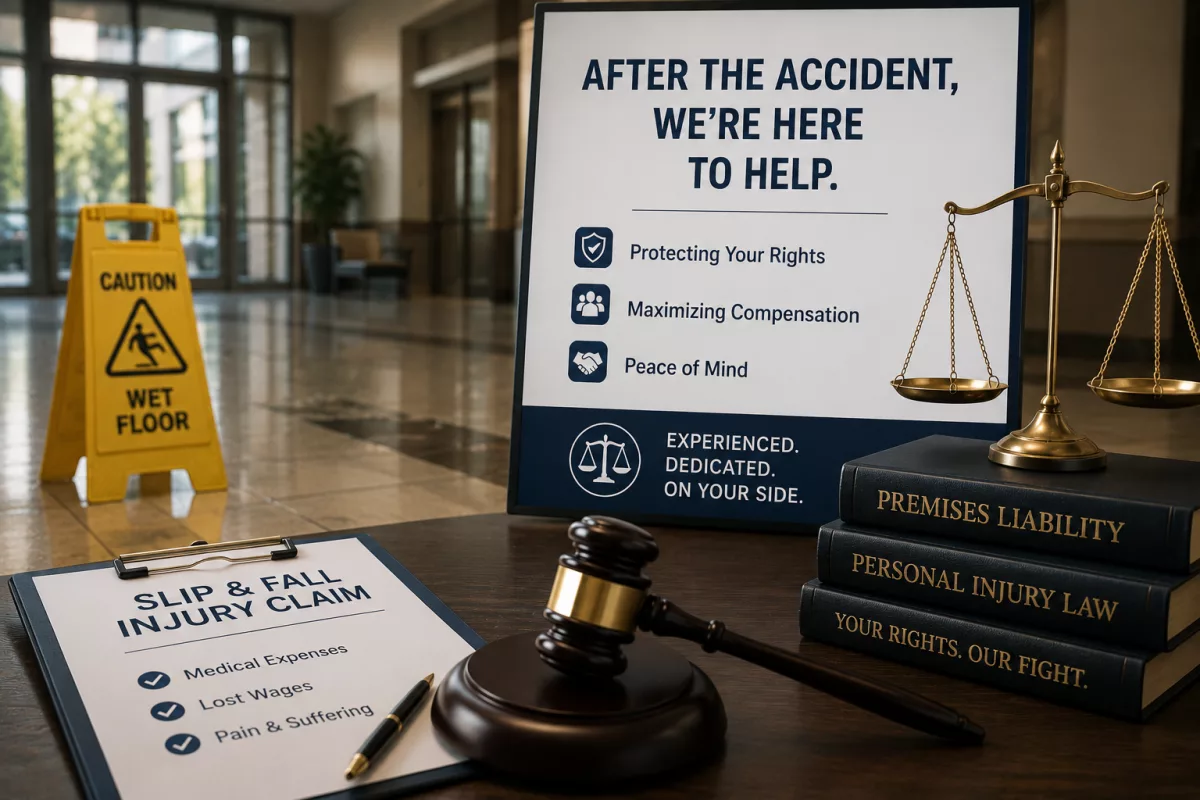
Need Help After a Slip and Fall Accident?
Look here. Accidents are an unpredictable aspect of life, and one such kind of accident can be the slip and fall accident. However, this is not the simple kind of incident because it can leave you with a variety of health problems and injuries that may disrupt your lifestyle and leave you struggling on a lot of levels. Some of these health injuries that a person may face as a result of a slip and fall accident include fractures, brain injury, damage to the spinal cord, among others. These injuries can affect many areas of your life including the ability to earn, do things, and live your life as you would want to. My team and I are here to assist you in all these matters and more.
Definition of a Slip and Fall Accident
But, what do you mean by "slip and fall"? The answer is simple - "slip and fall" refers to an accident where a person gets injured by falling onto another party's premises due to a dangerous situation that existed and the owner of the premises could foresee it. Moreover, he or she must have been aware of the situation but did not make any effort to fix it. In other words, this incident is the result of negligence and not clumsiness. There were many cases of such accidents where a person slipped on a wet floor in a supermarket or tripped over the broken sidewalk near a company.
Common Causes of These Accidents We Usually Encounter
In every new case involving a slip and fall injury, I am trying to figure out what actually caused it. For this purpose, it is essential to understand the root cause of the accident because it helps in establishing liability. Among the most frequent causes are the following:
- Floors which are wet or recently cleaned: Often times these are not marked with any adequate signs, aren't they?
- Damaged or uneven ground surface: Cracked sidewalk, parking lot full of potholes, worn carpeting, etc.
- Bad lighting: If there is no proper illumination, then it is difficult to notice possible dangers.
- Obstacles on aisles or walkways: Unnecessary boxes or merchandises, for example.
- Slippery floor coverings: Rugs or mats that can easily slip under your feet.
- Food or drink spills: Particularly popular in restaurants and grocery stores.
- Lack of handrails: On staircases or ramps where they are required by law.
And there are lots of other reasons that can make premises unsafe for customers.
Long-Term Effects: Learning About Your Injuries
It may seem like "a fall is just a fall" until you understand what sort of injuries could occur. Based on what I've seen, an injury victim may experience any number of injuries, both instant injuries and those that manifest over time. These include:
- Sprains and strains, especially in the ankles, wrists, and knees.
- Fractures, which can vary anywhere from broken bones to multiple bone fractures that require surgery.
- Injuries to the head, either in the form of concussions or even more serious Traumatic Brain Injuries (TBIs).
- Injuries to the spinal cord, which are extremely severe and can result in partial or total paralysis.
- Dislocations.
- Soft tissue injuries leading to chronic pain.
Besides being costly in terms of immediate medical bills, many such cases require long-term treatment through rehabilitation and physiotherapy. This is where seeking appropriate compensation becomes crucial for the victim's future.
Why You Need to Contact a Slip and Fall Attorney
Here I want to emphasize once again how beneficial it is to contact a lawyer after such an accident. Why? It's simple – the property owner's insurance company will not be on your side when you seek compensation, and the insurance adjuster's job will be to reduce the payments as much as possible. Such companies may give you lowball offers which do not even remotely cover the costs you have already incurred or will have to incur in the future. You shouldn't try to handle this on your own.
We, as your lawyers, will make things more equal and will make sure the insurance adjusters cannot abuse their positions. We will do our best to make sure that all your rights and interests will be preserved.
What Are the Responsibilities of a Slip and Fall Lawyer?
Our services are not limited to providing you assistance with your case. We will:
- Undertake an Extensive Investigation: We will conduct a thorough investigation of the scene, capture photographs of the evidence, talk to the witnesses and get the video footage if it is available to us. We will look into the maintenance records, incident reports and other complaints about the premises.
- Collect Important Evidence: We will be required to collect your medical records, bills, evidence about your employment status and lost wages and testimony from experts where necessary. At times, we might even consult accident reconstructionists and doctors.
- Prove Your Case: We will show how the property owner or manager is liable for your accident because of their negligence and failure to act responsibly.
- Negotiate with the Insurance Company: We will do all the negotiations with the insurance company so that they can give you what you deserve for your injuries.
- Go to Court with Your Case: If negotiation does not prove to be productive for you, we will always be willing to take your case to court.
Legal Process: What You Are Going To Experience With Our Help
Great, you are all set! Now what is going to happen? The following is a list of events which you should know about:
- Consultation: We are going to meet and discuss your accident, your injuries and everything else. Feel free to ask all the questions you want; this initial consultation is provided for free.
- Investigation and Evidence Gathering: As mentioned before, we will take care of everything which is required to build your case. Usually, it takes more time than other stages, but it's necessary.
- Demand Letter: After evaluating your damages, we will send out a demand letter to the property owner's insurance company, describing your injury and asking for compensation.
- Negotiation: They will surely make some offer, usually very small. This begins the negotiation process.
- Filing of a Lawsuit: Should our attempts at negotiations fail, we may have to file a suit. Not all cases which are filed as lawsuits end up in trials.
- The Discovery Process: Each party discloses information, evidence and also takes depositions from witnesses.
- Mediation/Arbitration: In some cases, there is mediation and arbitration by a neutral third party even before the trial commences.
- Trial: Should everything else fail, we go to court, and I will present your case before the jury or the judge.
This is a process indeed and we will be there by your side throughout giving you clear explanations of the procedures.
Recovery of Lost Gains: Kinds of Damages
What is meant by the term 'compensation' here? The damages that we seek to recover on your behalf include:
Economic Damages: Damages of this nature are easily calculable financial losses such as your medical bills (past, present and future), lost income (should you not be able to work), loss of earning potential due to your injury and property damages.
Non-Economic Damages: While harder to calculate and less exact, they are very important too and include pain and suffering, emotional distress, loss of enjoyment of life and loss of consortium.
Our task will be to quantify them accurately and make the insurance company realize the extent of your sufferings.
Choosing the Right Slip and Fall Lawyer: Criteria to Consider
While selecting an attorney for your case, you definitely would like to find someone who has extensive experience handling similar cases. It would not be enough to hire any attorney off the list; I strongly recommend that you choose one who:
- Is successful: You should ask about his or her past wins in similar cases.
- Is specialized in personal injury law: A specialization means that the attorney knows the ins and outs of personal injury law.
- Speaks plain English: You should be able to understand your attorney without special training.
- Contingency fee payment method: Majority of personal injury attorneys adopt this method, which means that you pay attorney fees only when he or she wins your case.